MBA-Trained Senior Analyst Reveals a Simple AI Prompt System That Helps Overworked Nigerian Professional Women Finally Leave the Office On Time — Without Sacrificing Their Output, Their Reputation, or Their Sanity

It is 8:47am.
You have not finished your morning coffee. Your laptop is already open. You are already behind.
Before you even sat down at your desk, your manager had already sent two messages on Teams. Your inbox has 47 unread emails — and that number will be 61 before lunch. You have a report due by end of week that you have not started. And somewhere at the back of your mind, very quietly, a voice is saying what it says every single morning:
How are the others managing? What do they know that I don't?
You are good at your job. You know you are. You have the certifications. You have the years. You have the performance reviews that say "exceeds expectations" while somehow always adding "could be more strategic with time management." As if time management is the problem. As if you are not already working yourself to the bone.
But something is wrong. And you know it.
The reports take too long. The emails take too long. The stakeholder presentations take too long. You tell yourself it is because you care about quality — and you do. But deep down you know there is something else going on. Your colleagues seem to move faster. They seem lighter. They leave at 5:30 while you are still there at 7:45, staring at a spreadsheet that should have been done two hours ago.
Am I slower than them? Am I less capable than I think?
You never say this out loud. You are a Senior Analyst. A Project Manager. An Accountant. A Pricing Specialist. You cannot afford to look like you are struggling.
So you stay quiet. You stay late. You bring the laptop home. You tell your children "Mummy is still working, baby" for the third evening in a row. Your husband goes to bed alone again and says nothing — which is somehow worse than if he said something.
You have heard about AI. ChatGPT. Microsoft Copilot. Everyone is talking about it like it is magic. You downloaded ChatGPT three months ago. You stared at the blank box. You typed something. It gave you something useless and generic that had nothing to do with your actual job. You felt foolish. You closed the app. You told nobody.
I should know how to use this already. Why don't I know how to use this?
You watched a YouTube tutorial. It was 45 minutes long and built entirely around American workplace examples that had nothing to do with your pricing data or your stakeholder emails or the quarterly dashboard your Director is expecting by Friday morning.
You attended a company training. You left with a printed handout and zero ability to apply anything on Monday morning.
You bought a Udemy course. It is still sitting in your account, four modules in, collecting digital dust.
Nothing has worked. Not because you are not smart enough — you are exceptionally smart. But because nobody has given you the right thing. Nobody has sat down with you and shown you exactly what to type, for your actual job, today.
Until now.
Drop everything you are doing right now and read every single word I am about to say.
Because I am about to share with you a simple AI prompt system that changed everything for me — and has now quietly changed everything for dozens of professional women just like you.
This method did not come from a tech blog. It did not come from Silicon Valley. It did not come from a LinkedIn influencer who has never sat in a Nigerian corporate office and tried to produce a board-ready dashboard before a 9am management review.
It came from a woman who had done exactly that — for decades — and had learned something most people never get to learn. Something she shared with me over jollof rice and small chops on a Friday evening in January, at a send-off dinner in Victoria Island. Something that changed the way I work forever.
My name is Temi A.
The first thing you should know about me is that I am not a tech expert. I am not a digital consultant. I am not someone who grew up programming or who naturally takes to new tools. I am a 34-year-old Senior Pricing Analyst based in Lagos. Married. Mother of a toddler. Holder of a professional certification I worked incredibly hard for. And for the last several years, I have been the woman in the office who always delivers — while quietly drowning behind the scenes.

How It Started
I joined my current company eight years ago as a junior analyst. I was hungry, I was focused, and I was good. I got promoted. Then promoted again. By 2022 I was a Senior Pricing Analyst managing a portfolio of clients that would make your head spin — and I was proud of it. Every single day I was proud of it.
Then I had my daughter.
I came back from maternity leave in early 2024 to a team that had moved on without me. New systems. New processes. An AI pilot programme the company had quietly rolled out while I was away. Everyone seemed to have settled into a new rhythm — and I was supposed to just... step back in. As if nothing had changed.
But everything had changed.
The work was the same. My capacity was not.
I was feeding a toddler at 2am and expected to produce polished reports by 9. I was running on four hours of sleep and trying to draft stakeholder communications that sounded confident and strategic. I was spending Tuesday working on a report I should have finished on Monday. I was staying until 7:30, 8pm, sometimes later. My husband Biodun would call at 6 and I would say "almost done" — and we both knew I was not almost done.
The thing about Biodun is that he is not a difficult man. He has never raised his voice at me about this. He never complained directly. He just got quieter. That particular quiet that married women will understand immediately — the one that is worse than any argument. The quiet that says: I am here. But you are not.
One evening I came home at 8:45pm. My daughter was already asleep. I had missed bedtime again. Biodun was in the sitting room watching something on his phone with his earphones in. He saw me walk in, nodded, and looked back at his phone. He did not take his earphones out.
I went to the bathroom, sat on the edge of the tub, and cried for twelve minutes.
I was excellent at work. I was failing at home. And I did not know how to fix either one without sacrificing the other.
What I Tried That Did Not Work
I did not accept the situation without fighting it. I tried everything I could find.
YouTube tutorials. I searched "ChatGPT for work" and watched three different videos. The longest one was 52 minutes. Every single example was built around American corporate culture — American email conventions, American presentation styles, American workplace dynamics. Nothing mapped onto my actual deliverables. Nothing showed me what to type to produce a pricing variance analysis or a vendor performance summary. I stopped watching after the third one.
My colleague Emeka. He is a smart man. Good with technology. I quietly asked him to show me how to use AI "properly." He sat with me for five minutes, talked very fast, used terms I had never heard, and then had to go to a meeting. I nodded like I understood. I understood nothing. I was too embarrassed as a senior analyst to admit it and ask him to slow down.
ChatGPT on my own. I downloaded the app. I stared at the blinking cursor. I typed: "Write me a pricing report for my company." It gave me a generic, hollow, completely unusable template that had nothing to do with my client, my data, or my industry. I stared at it for a moment and then closed the app. I did not open it again for two months.
The company's AI training session. One afternoon, an hour and a half, a facilitator from an external firm who had clearly never worked in pricing or data analysis. The session covered the general concept of AI, showed us what ChatGPT was, and gave us a printed handout with "tips for prompting." By Monday morning I had retained nothing useful. The handout is still somewhere in my office bag.
A Udemy course. I found one called "AI for Working Professionals" with excellent reviews. I paid for it. I watched four modules. The fifth module assumed a level of technical knowledge I simply did not have. I felt lost and a bit stupid. The remaining 21 modules are still unwatched. The course expires next March.
Productivity systems. Notion. Time-blocking. The Pomodoro technique. A colour-coded calendar. These things genuinely helped me organise my chaos. But they did not make the work go faster. I became much more efficient at tracking exactly how behind I was. The reports still took four hours. The emails still took forty-five minutes. Nothing made the actual tasks shorter.
The Friday Evening That Changed Everything
In January 2026 — a Friday evening — one of my colleagues was leaving for a new role and we were having a small send-off dinner at a restaurant on the Island. I had almost not come. I had a report due Monday and had planned to work through the weekend. But it felt wrong not to show face, so I told myself: one hour, and then I'm leaving.
I ended up seated next to a woman I had met twice before at industry events. Her name was Ngozi. Aunty Ngozi, everyone called her. A former Director of Operations at one of the leading financial institutions in Lagos, now running her own boutique consulting firm from a very calm, very beautiful office in Lekki. She was the kind of woman who made you feel like everything was under control just by sitting near her.
I had been discreetly checking my work email under the table — don't judge me, I know — when she leaned over very quietly and said:
"How long have you been taking work home with you?"
I laughed nervously. "Too long," I said.
She nodded slowly. Not judgmentally. Just... knowingly. Like a woman who had been exactly where I was and come out the other side.
"I used to do the same thing," she said. "Then someone showed me how to stop. Can I show you too?"
What Aunty Ngozi Showed Me
She pulled out her phone. She opened ChatGPT. And she said something that I have thought about almost every single working day since:
"The reason AI gives you rubbish is not because you are using the wrong tool. It is because you are asking the wrong way. AI is not a search engine. It is not Google. It is more like a very brilliant intern. If you give a brilliant intern a vague instruction, you get a vague result. But if you give them a precise brief — tell them exactly who you are, what you need, in what format, with what constraints — they produce something extraordinary. Every single time."
She had developed something she called the C.T.F.C. formula. Context. Task. Format. Constraint. Four parts to every prompt. She had spent two years building a personal library of prompts — organised by task type, built for her specific consulting work — and she had been quietly refining them ever since.
She showed me three prompts on her phone. Right there at the dinner table, between the jollof rice and the small chops.
The first one was a report narrative prompt. She explained what each part of the prompt was doing. Why the context mattered. Why the format instruction changed the output completely. Why the constraint prevented the AI from going off in irrelevant directions.
I will be honest with you. My first reaction was scepticism.
This looks too simple, I thought. If it were this simple, wouldn't everyone be doing it?
But I copied the three prompts into my notes app before we said our goodbyes. I was not going to let pride stop me from trying something that might help.
Monday Morning
I sat at my desk at 8:30am with my coffee. I opened my notes app. I opened ChatGPT. I pulled up the data for the report that was due that day — a pricing variance analysis I had been dreading since Thursday.
I copied Aunty Ngozi's report narrative prompt. I filled in the Context section with my specific role and industry. I filled in the Task with what the report needed to cover. I filled in the Format — how many sections, what the executive summary should include, the tone for my Director. I filled in the Constraint — what to leave out, what assumptions to avoid.
I pressed enter.
What came back was not perfect. I want to be honest. It was not a finished report. But it was a structured, intelligent, professional-grade narrative that I could edit and refine in a fraction of the time it would normally take me to write from scratch.
I finished the report in 38 minutes.
That report would normally have consumed most of my Tuesday.
I sat back in my chair and stared at my screen for a moment. I actually laughed out loud. My colleague at the next desk looked over and said, "What happened?"
"Nothing," I said. "I just finished something early."
By Monday Afternoon
There was an email I had been avoiding for two days. A difficult stakeholder communication — a client was unhappy about a pricing adjustment and I needed to respond in a way that was firm but diplomatic, that acknowledged their concern without conceding on the numbers, and that preserved the relationship. I had started drafting it twice and deleted both attempts.
I used the stakeholder email prompt.
Six minutes later I had a response I was proud to send.
I left the office at 5:47pm.
For the first time in four months, I was home before my daughter's bedtime.
What Biodun Said
He was in the kitchen when I walked in. He turned around, looked at me, then looked at the clock on the wall. Then back at me. Then back at the clock.
"Temi — it's not even 6."
I smiled. He crossed the kitchen and hugged me — properly, not the quick side-hug of a tired evening — and said quietly into my shoulder:
"This is all I have been wanting. Just you. Home. Not stressed. Actually here."
I did not tell him about the prompts that night. I just stayed present. I sat with my daughter until she fell asleep. I had dinner with my husband at an actual table and talked about actual things that were not work.
That was enough.
I Was Not The Only One
I went back to Aunty Ngozi the following week to thank her. She laughed warmly and said she had actually shared the prompts with two other women at the dinner — Adaeze and Funke.
Adaeze is a Project Manager in Abuja. She told me she had used the meeting minutes prompt the Tuesday after the dinner and produced a clean, structured set of minutes for a three-hour management meeting in under twenty minutes. She normally spent most of the following morning on them.
Funke works in marketing in Port Harcourt and had been dreading a quarterly performance presentation to her leadership team. She used the executive narrative prompt and said her MD stopped her mid-presentation to ask who had helped her write it. She smiled and said she had done it herself. Because she had.
These were not tech people. These were not women who had ever described themselves as comfortable with AI. These were professional women with real jobs and real pressures — who had simply been shown the right way to ask.
Why I Turned This Into a Guide
Word travels. After I started talking quietly about what had changed for me, I began getting messages. From former colleagues. From women in my professional network. From women I had met at conferences and training sessions over the years. "Temi, can you share those prompts?" "Temi, can you show me what to type?" "Temi, can we meet so you can walk me through it?"
I could not meet with everyone. I had a job. I had a toddler. I had a life I was just getting back.
So I did something more useful.
I sat down — over several weekends, with Aunty Ngozi's input and my own experience across four months of daily use — and I built something comprehensive. Something organised. Something that any professional woman could pick up and start using on her very next working day.
I put everything inside — the full C.T.F.C. formula, the exact prompts by role, the email vault, the presentation guides, the time-saving tracker, the morning AI workflow — in one simple, beautifully designed PDF guide.
Introducing…
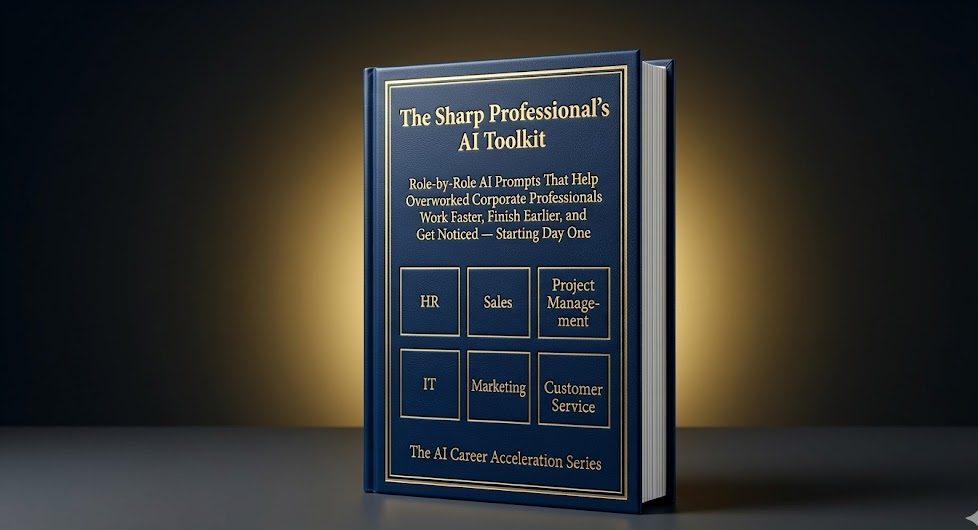
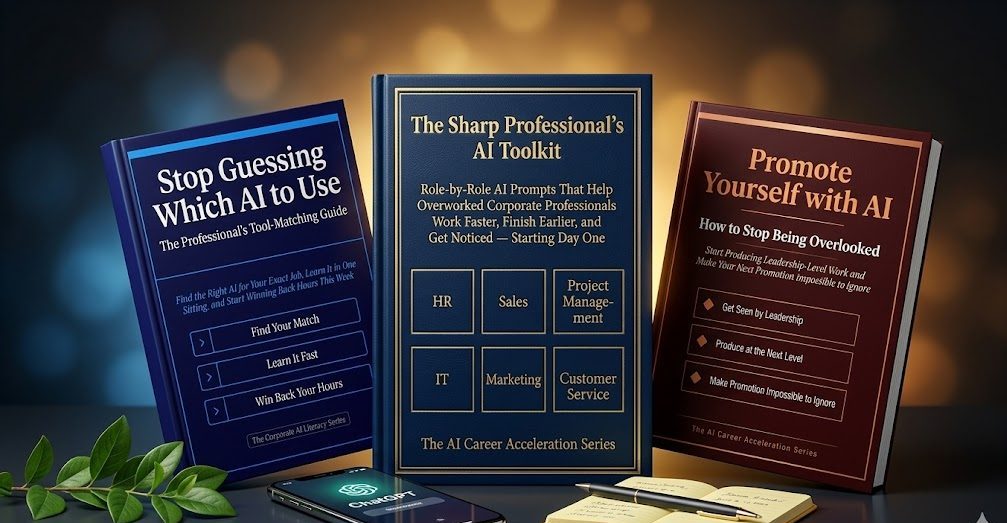
The Sharp Professional's AI Toolkit
Role-by-Role AI Prompts That Help Overworked Corporate Professionals Work Faster, Finish Earlier, and Get Noticed — Starting Day One
Inside This e-Guide, You'll Discover:
- The AI Task Audit Checklist — before you read a single prompt, this simple checklist shows you exactly which of your daily tasks are eating the most time. Start with the highest-impact changes first. → Pg. 3
- Why AI Keeps Disappointing You — the real reason most professionals get useless output from ChatGPT and Copilot every time they try. One single change fixes this immediately. → Pg. 7
- The C.T.F.C. Prompt Formula — Context. Task. Format. Constraint. The four-part system behind every powerful prompt in this guide. Learn it once. Use it forever. For everything. → Pg. 11
- Role-by-Role Prompt Sections — copy-ready AI prompts built specifically for Data Analysts, Pricing Specialists, Project Managers, Accountants, Sales Executives, Marketing Professionals, Customer Service Leads, Procurement Officers, Vendor Managers, Executive Assistants, and Team Leads. No generic advice. Only prompts that work for your actual role and your actual daily deliverables. → Pg. 15–89
- The 5-Minute Email Fix — one universal prompt that turns any rough draft, voice note transcript, or bullet-point list into a polished, professional email in under 60 seconds. Works for every role, every seniority level, every situation. → Pg. 16
- The Stakeholder Management Email Vault — 8 high-stakes email scenarios built specifically for Project Managers, with a copy-ready prompt for every situation: scope changes, delivery delays, difficult clients, leadership updates, and more. → Pg. 44
- The Executive Dashboard Preparation Guide — how to use AI to produce boardroom-ready dashboards complete with insight captions, executive narratives, and leadership-level data storytelling that makes your work visible at the top. → Pg. 22
- The Master Prompt Library — every single prompt in the entire guide, organised by role, on one single reference page. Your daily cheat sheet. Pin it. Print it. Use it every morning. → Pg. 91
- The Weekly Time-Saving Tracker — a simple table where you record exactly how many hours AI saves you each week. Watch the number grow. Use it as your performance evidence. Use it to make a case for yourself at appraisal time. → Pg. 94
- The 10-Minute Daily AI Workflow — a simple morning routine that uses AI to set up your entire working day before the chaos begins. Clear your head. Prioritise smarter. Start the day ahead — not already behind. → Pg. 96
And the best part? You do not need to be technical. You do not need prior AI experience. You do not need to understand how any of it works under the hood. You just need to open the guide, go to your role section, copy the prompt, fill in your details, and press enter.
This is the same simple method that worked for me — and has now quietly worked for over 200 professional women I have shared it with, tested it with, and refined it with across different industries, different roles, and different cities.
Real Women. Real Testimonials.
Verified results from professional women across Nigeria and the diaspora
I swear on my children, this guide has changed my life. I bought it on a Sunday evening. Monday morning I used the meeting minutes prompt after a 3-hour management meeting and produced a clean, approved set of minutes in 19 minutes. 19 minutes! That work used to take me almost all of Tuesday morning. My manager actually asked me if I had a PA now. I smiled and said "something like that." Sister, buy this thing. Buy it NOW.
Before this guide, I don't think I had left the office before 7pm in three months. I was always the last one. Always. My team would go and I would still be there finishing things that honestly should have been done at lunchtime. I used the presentation narrative prompt for my quarterly review and my MD stopped me mid-slide to ask who helped me write the executive summary. I told him I did it myself. Because I did. I have not stayed past 6pm in two weeks. This is not an exaggeration. Two weeks. Straight.
E no be beans. I have tried three other AI courses and none of them gave me anything I could use at work the next day. This guide is different because it is built for people in actual corporate jobs with actual daily pressures. The prompts for data analysts are accurate — they produce the kind of output that looks like a senior person wrote it. Which, to be fair, I am. But before this, you could not tell from my work rate. Now you can. My line manager said I seem "more confident" in meetings. I have not told her why. Thank you Temi.
I am in procurement and I honestly did not think this guide would have anything useful for me. I almost didn't buy it. But the procurement section — ehn! — it is thorough. The vendor evaluation prompts alone have saved me hours. I produced a vendor performance report last week that my Director circulated to the entire team as an example of good reporting. From me. Who has never been described as "strong on documentation" in my life. Buy this guide, abeg.
I bought this from Toronto and it is fully relevant to the corporate world here too. The C.T.F.C. formula is genuinely brilliant — once you understand it, everything clicks. I have used it for management account narratives, board pack summaries, and inter-departmental emails. My manager literally said last Thursday, "Sade, your written communication has really improved lately." I wanted to say: "No ma, my prompts have improved." The guide paid for itself on Day 1. I am not exaggerating.
Share Your Experience
Just So You Know… Putting This Guide Together in a Format You Can Use on Monday Morning Cost Me Over ₦340,000.
- Research time across ten corporate roles — weeks of interviews, prompt testing, and real-world application across pricing, accounting, project management, sales, marketing, procurement, and more
- AI tool subscriptions — ChatGPT Plus, Microsoft Copilot, and supporting tools used to test, refine, and verify every single prompt in the guide over four months
- Prompt testing and expert review — every role section reviewed by an active professional in that role to confirm the prompts produce accurate, usable output in a real Nigerian corporate environment
- Professional PDF design — layout, typography, visual hierarchy, and formatting by a professional designer so the guide is easy to read, easy to navigate, and looks like something you are proud to have on your laptop
- Aunty Ngozi's consultation input — her two years of refined prompt development, her role-specific expertise, and her quiet but invaluable professional knowledge built directly into the framework and method
I am not going to charge you ₦340,000. That would be unfair.
I will not even charge you half of that — ₦170,000.
Not even a quarter — ₦85,000.
In fact, you will not even pay the fair market price of…
₦25,000Today, you can get The Sharp Professional's AI Toolkit for just:
₦9,800 One-time payment. Instant download. No subscription. Yours forever.✅ Card · Bank Transfer · USSD · All Nigerian debit cards accepted
WAIT. I Have FREE Gifts For You.
If you are among the FIRST 50 BUYERS, you get these two powerful bonuses completely free alongside your guide. TODAY ONLY.
FREE BONUS #1
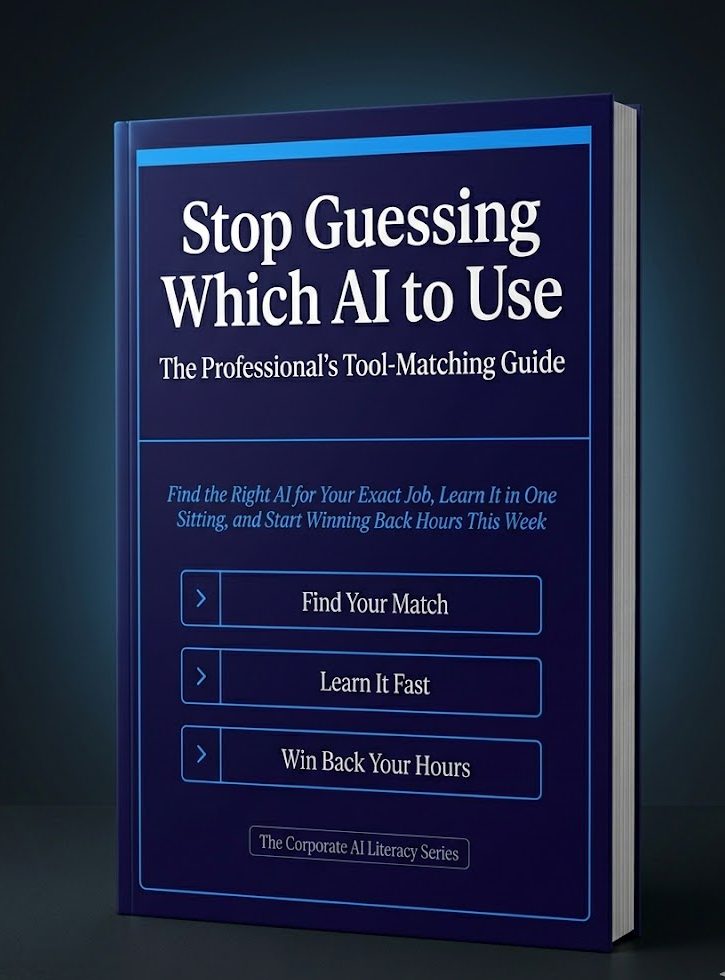
Stop Guessing Which AI to Use
The Professional's Tool-Matching Guide That Tells Every Corporate Professional Exactly Which AI to Open, What to Use It For, and How to Get Your First Useful Result in One Sitting — No Technical Knowledge Required.
Find your match, learn it fast, and start winning back hours this week. This guide maps every role to the right AI tool and tells you exactly what to use it for, step by step.
Sold separately for ₦5,000 — yours FREE today
FREE BONUS #2
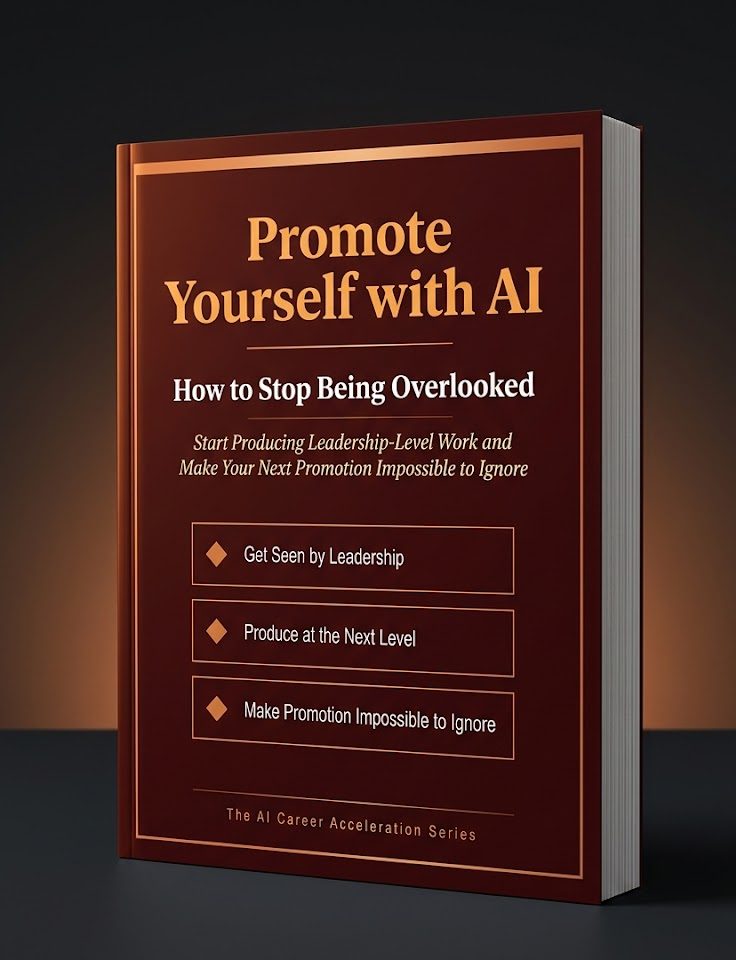
Promote Yourself with AI
How to Stop Being Overlooked. Start Producing Leadership-Level Work and Make Your Next Promotion Impossible to Ignore.
Your work is good. But is it visible? This bonus shows you exactly how to get seen by leadership, produce at the next level, and make your promotion impossible to ignore — using AI strategically and consistently.
Sold separately for ₦5,000 — yours FREE today
You Pay: ₦9,800 — if you are in the first 50.
✅ No subscription. No monthly fees. One payment. Yours forever.
Others Are Already Inside. Don't Be Left Out.
38 people have already taken advantage of this discounted offer —
and only 12 spots remain before the bonuses are removed permanently.
Bear in mind — you are not the only one viewing this page right now.
My 30-Day Action-Based Money-Back Guarantee
Still feeling unsure? I completely understand. Buying something you have never seen before — even for ₦9,800 — takes trust. I do not take that lightly.
Which is why I am making you this bold, risk-free promise:
Open the guide. Go to your role section. Use the prompts on your real daily work tasks. Do this for 30 days.
If you do not save meaningful time on the work you do every single day — if you do not feel the difference in your working hours, your output quality, or your energy at the end of the day — send me one message. I will refund every naira, no difficult questions, no lengthy back-and-forth process.
Your results, or your money back. Completely.
This guarantee exists because I am confident enough in this guide to put my money behind it. You should be too.
More Women. More Results.
From Lagos to London — professional women are getting their time back.
The customer service section of this guide is exactly what I needed. The escalation email prompts are something else — professional, calm, solution-focused. I used three of them in my first week and my manager commented that my written communication had "significantly improved." I have been working at this company for six years. No one has ever used the words "significantly improved" about my emails. This guide is the reason. I have already recommended it to four people.
Na God send this guide come my way sha. The sales section — the proposal templates, the follow-up sequences — all built around real Nigerian corporate selling. Not some American examples wey no make sense. I used the proposal prompt for a pitch last week and the client said my proposal was the most "structured and professional" of the three they received. We got the contract. Temi, I will be telling everybody about you. Thank you so much.
I bought this on a Tuesday and finished my Thursday board pack summary using the executive dashboard prompt. It took me 45 minutes. I normally block out an entire afternoon for that task. My colleague — who is not Nigerian, who has been in finance for fifteen years — looked at my summary and said "did you have help with this?" I said no. Because I didn't. I just had the right prompts. I am already on my second read-through. This is now a permanent part of how I work.
I was the woman who always stayed late. Everybody knew it. My team would leave and I would still be there. I thought it was dedication. It wasn't. It was inefficiency that I didn't know how to fix. This guide fixed it. The weekly time-saving tracker alone — watching the hours add up — is motivation I didn't know I needed. In two weeks I have saved eleven documented hours. Eleven hours. That is almost a full extra working day. I have been going home on time and I cannot overstate how much this has changed my house.
I almost didn't buy this because of where I am based — I thought it would be too Nigeria-specific. But the C.T.F.C. formula is universal and the prompts are adapted and relevant. My contract review summary prompts have been a game changer. I produced a vendor risk summary last month that my director said was "boardroom quality." That phrase. From my director. I have been waiting five years to hear something like that. ₦9,800 is nothing for what this guide has done for my professional confidence. Nothing.
It Comes Down To This.
You get The Sharp Professional's AI Toolkit today. You open it tonight or first thing tomorrow morning. You go straight to your role section. You use the prompts on the work that is already waiting for you. You leave the office on time. You get home. You are present. You are no longer the last one in the building. You are no longer staying up finishing reports at 11pm. You are no longer missing bedtime. You are no longer carrying the weight of quiet, invisible exhaustion — because you have the right tool, finally, and you know exactly how to use it.
You go back to working the way you have been working. The reports still take four hours. The emails still take forty-five minutes. You are still the last one to leave. You still come home when the house is quiet. You still feel behind colleagues who seem to manage effortlessly. You still hear about AI but never quite know where to start. Maybe something changes eventually. Maybe it doesn't. Maybe you stumble onto something better somewhere else. Who knows.
Or maybe God wanted you to read this page today for a reason.
✅ Selar & Nestuge accept all Nigerian debit cards, bank transfers, and USSD payments.
If one is down, the other is up. You will always get in.