The Elder's Health Journal
Traditional Dietary Wisdom for Blood Sugar Support
Generic "eat less carbs" advice doesn't work for Nigerian diets. Herbal "cures" don't work at all. Your medication fights the blood sugar while your diet may be fighting the medication. You just chose the protocol that makes them work together.
30 days. Same foods, different preparation. The numbers stabilise. The doctor notices.
🌿 "My body is not failing me. My medication needs dietary support to work effectively. The starch in my meals was fighting my medication every day. This protocol restructures how I eat so the medication can do its job. In 30 days, the numbers tell the story."
Your Complete Support System Is Ready
Click the button below to download the full protocol and both bonus guides instantly.
Download Your Guides Now📦 Here's What You Got
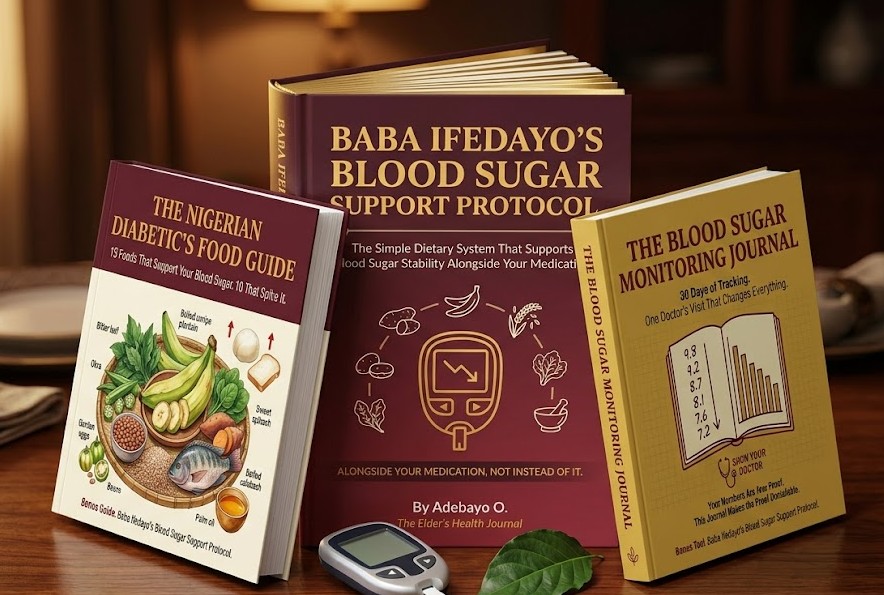
The complete 3-part system: food restructure (Nigerian food swaps that reduce glycaemic load), morning stabiliser (natural preparation alongside your medication), and evening protocol (restructure the 4 hours before sleep to improve fasting readings)
15 Nigerian foods that support blood sugar stability. The 10 that spike it fastest. Visual glycaemic load chart for every major Nigerian staple. Print it for your kitchen
30-day printable tracking journal with daily spaces for fasting, post-meal, and evening readings plus foods eaten. Take it to your doctor and let the numbers speak
Your First 48 Hours
Download Everything Now
Tap the button above. Save all 3 files to your phone. You'll reference the main protocol and food guide daily for the next 30 days.
Read the Food Guide Tonight (Bonus #1)
Open the Nigerian Diabetic's Food Guide. Check the list of 10 common Nigerian foods that spike blood sugar fastest. Most people find 4-5 they eat regularly. Identifying them tonight means you can start making swaps at tomorrow's first meal.
Print the Glycaemic Load Cheat Sheet
Page 8 of the Food Guide has the visual chart showing every major Nigerian food and its blood sugar impact. Print it and tape it inside a kitchen cupboard or on your fridge. This one sheet changes how you shop, cook, and eat from Day 1.
Start the Morning Stabiliser Tomorrow
Page 14 of the main protocol has the morning stabiliser recipe. Ingredients from any Nigerian market, under ₦2,000 for a month's supply. Prepare it tonight. Take it tomorrow morning alongside your regular medication. Not instead of it. Alongside it.
Begin Tracking in the Journal Tomorrow
Print the 30-day journal from Bonus #2. Record your fasting blood sugar tomorrow morning before breakfast. This is your Day 1 baseline. Every reading after this one is data. By Day 30, the trend line in your journal is what you show your doctor.
🌿 What to Expect Over 30 Days
⚡ Quick Win: Do This Right Now
Open the Food Guide (Bonus #1) to Page 3.
Read the section on how starch converts to blood glucose the same way sugar does.
Then look at what you ate for dinner tonight. Count the starch sources on your plate. Most Nigerian evening meals have 2-3 starch sources (rice + plantain, amala + bread, yam + garri). Each one is feeding your blood sugar while you sleep.
Tomorrow evening, use the Evening Protocol (Page 18 of the main guide) to restructure what you eat before bed. One restructured evening meal. One improved fasting reading the next morning. That's the preview of what 30 days delivers.
"Your fasting blood sugar is the report card for what you ate the night before. Change the evening, change the morning."

⚠️ Medical Reminder
This protocol is a dietary SUPPORT system. It does NOT replace your diabetes medication, your doctor's advice, or your regular check-ups.
Do NOT change, reduce, or stop any prescribed medication based on this guide. Any medication changes must be made by YOUR DOCTOR based on your individual blood work and clinical assessment.
If you experience symptoms of low blood sugar (shakiness, dizziness, sweating, confusion) while following this protocol, eat or drink something sugary immediately and contact your doctor. Improved dietary management alongside medication can occasionally lower blood sugar more than expected.
🛡️ Keep Everything Guarantee
Try the protocol for 30 days alongside your medication. If you're not satisfied for any reason, full refund. You keep the protocol, food guide, and monitoring journal regardless.
Need Help?
Questions about the food swaps, the morning stabiliser, the evening protocol, or anything at all? Reach out. We're here to support your blood sugar journey.